The Short Answer: Yes, QR Codes Are Free
If you have ever wondered "are QR codes free?" the answer is straightforward: yes. The QR code is an open, royalty-free standard. You do not need to buy a license, pay a fee, or get permission from anyone to generate, print, or scan a QR code. The technology is defined by the international standard ISO/IEC 18004, and its inventor — a Japanese company called Denso Wave — made a historic decision to let the world use it at no cost.
This means the billions of QR codes printed on restaurant menus, concert tickets, product packaging, and advertising billboards around the world are all using a technology that is fundamentally free. No one is collecting royalties. No one is sending invoices. The standard itself belongs to everyone.
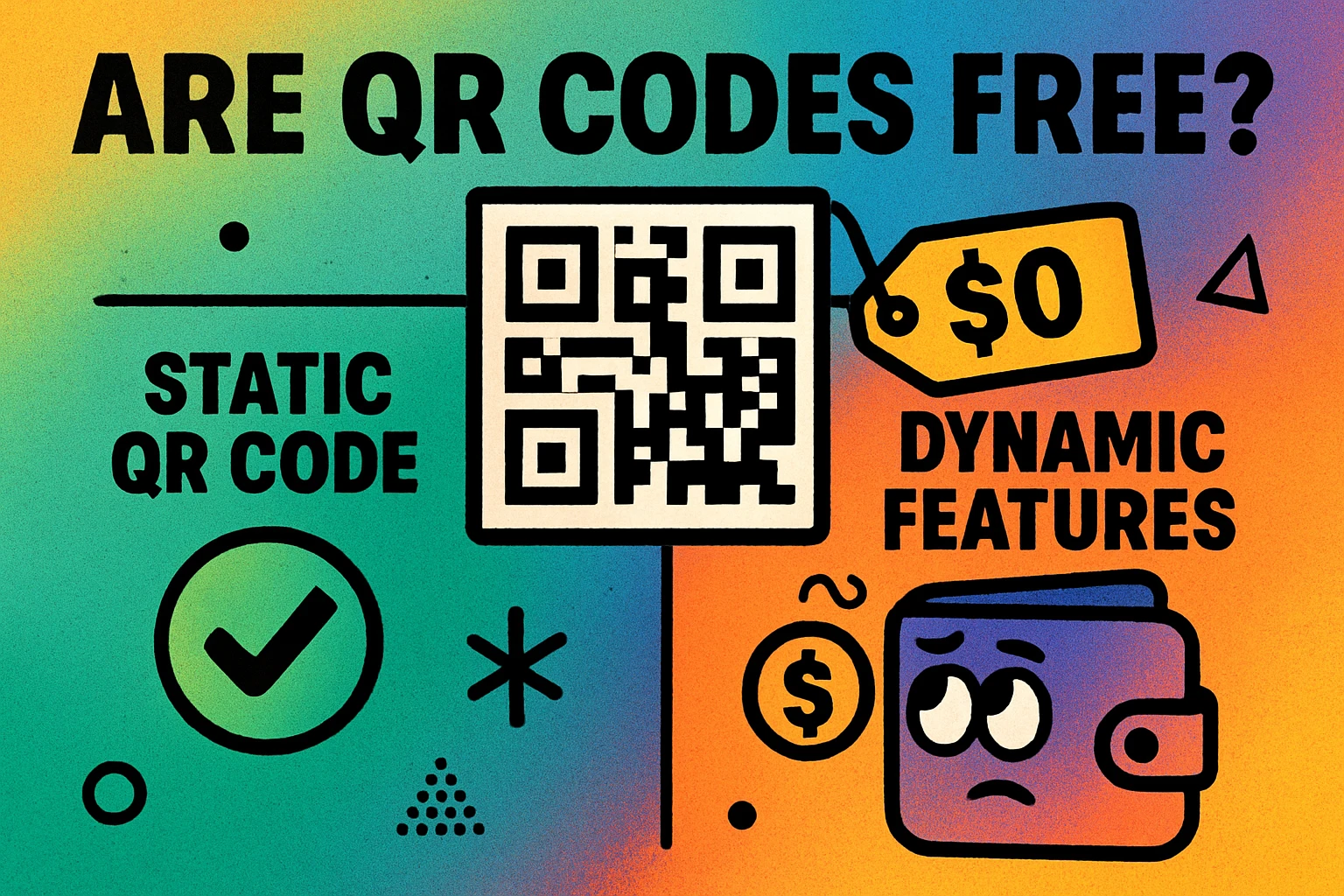
That said, "free" has layers. The standard is free. Generating a basic QR code is free. But some of the services and features built on top of QR codes — like analytics dashboards, dynamic redirects, and bulk generation — can cost money. The rest of this article breaks down exactly what is free, what is not, and where to watch out for hidden catches. For a broader overview of how QR codes work, see our complete QR code guide.
The QR code standard is royalty-free. You never need to pay anyone for the right to create or use a QR code. Costs only arise when you use premium software features built around QR codes — not from the codes themselves.
The Patent Story: Why Denso Wave Changed Everything
The QR code was invented in 1994 by a team at Denso Wave, a subsidiary of the Toyota Group, led by engineer Masahiro Hara. It was originally designed to track automotive parts on the factory floor — a faster, more capable successor to the traditional barcode.
Denso Wave filed a patent for the QR code technology and holds the rights to it. Under normal circumstances, this would mean anyone using the technology would need to pay licensing fees — just like with many other patented standards in the tech world. But Denso Wave made a different choice.
The company announced that it would not exercise its patent rights. In practical terms, this means anyone in the world can create, distribute, and scan QR codes without owing Denso Wave a single cent. The decision was deliberate: Denso Wave wanted QR codes to be adopted as widely as possible, and removing the licensing barrier was the fastest way to achieve that.
It is worth noting that "QR Code" is a registered trademark of Denso Wave in several countries, including Japan. This means you cannot use the phrase "QR Code" as a brand name or imply that Denso Wave endorses your product. But using the technology itself — generating, printing, and scanning the two-dimensional barcode patterns — is completely free and unrestricted.
Denso Wave holds the patent but chose not to enforce it. This single decision is why QR codes became a global standard used by billions of people. The trademark "QR Code" is protected, but the technology is free for everyone.
What Is Actually Free
Let's be specific about what costs you nothing:
- The QR code standard itself. ISO/IEC 18004 defines how QR codes work. Anyone can implement it without paying royalties.
- Generating static QR codes. A static QR code encodes data — a URL, text, phone number, Wi-Fi credentials — directly into the pattern. Once created, it never changes and never expires. Dozens of free tools, including ours, let you create these instantly. Learn more about how these work in our static vs dynamic QR code comparison.
- Printing and displaying QR codes. You can print a QR code on any surface — paper, plastic, metal, fabric — without licensing concerns.
- Scanning QR codes. Every modern smartphone has a built-in QR code reader in its camera app. No special software is needed.
- Using QR codes commercially. Businesses, nonprofits, governments, and individuals can all use QR codes in commercial contexts without paying anyone for the privilege.
In other words, the entire lifecycle of a basic QR code — creation, printing, scanning, and data retrieval — is free. You can go from idea to printed QR code in under a minute without spending a cent.
What Actually Costs Money
If the QR code itself is free, what are all those QR code companies charging for? The answer: software and services built around QR codes, not the codes themselves. Here is what typically sits behind a paywall:
Dynamic QR Codes
A dynamic QR code does not encode your final URL directly. Instead, it encodes a short redirect URL controlled by the QR code service. This means you can change where the code points after it has been printed — without reprinting it. Dynamic codes require a server running 24/7 to handle the redirects, and that infrastructure costs money to operate. Most services charge a monthly fee for dynamic codes.
Scan Analytics and Tracking
Want to know how many people scanned your code, when they scanned it, where they were, and what device they used? That data collection and dashboard infrastructure is a premium feature at most providers.
Custom Branding and Design
Advanced customization — branded colors, logo embedding, custom shapes, and design templates — is often locked behind paid tiers. Basic black-and-white codes are free everywhere, but pixel-perfect branded codes are a different story.
Bulk Generation
Generating thousands of unique QR codes at once (for product serialization, event tickets, or inventory management) typically requires paid API access or enterprise-tier plans.
Team and Enterprise Features
Multi-user accounts, role-based permissions, audit logs, SSO integration, and SLA guarantees are standard enterprise add-ons that come with a price tag.
Free vs Paid QR Code Services: A Comparison
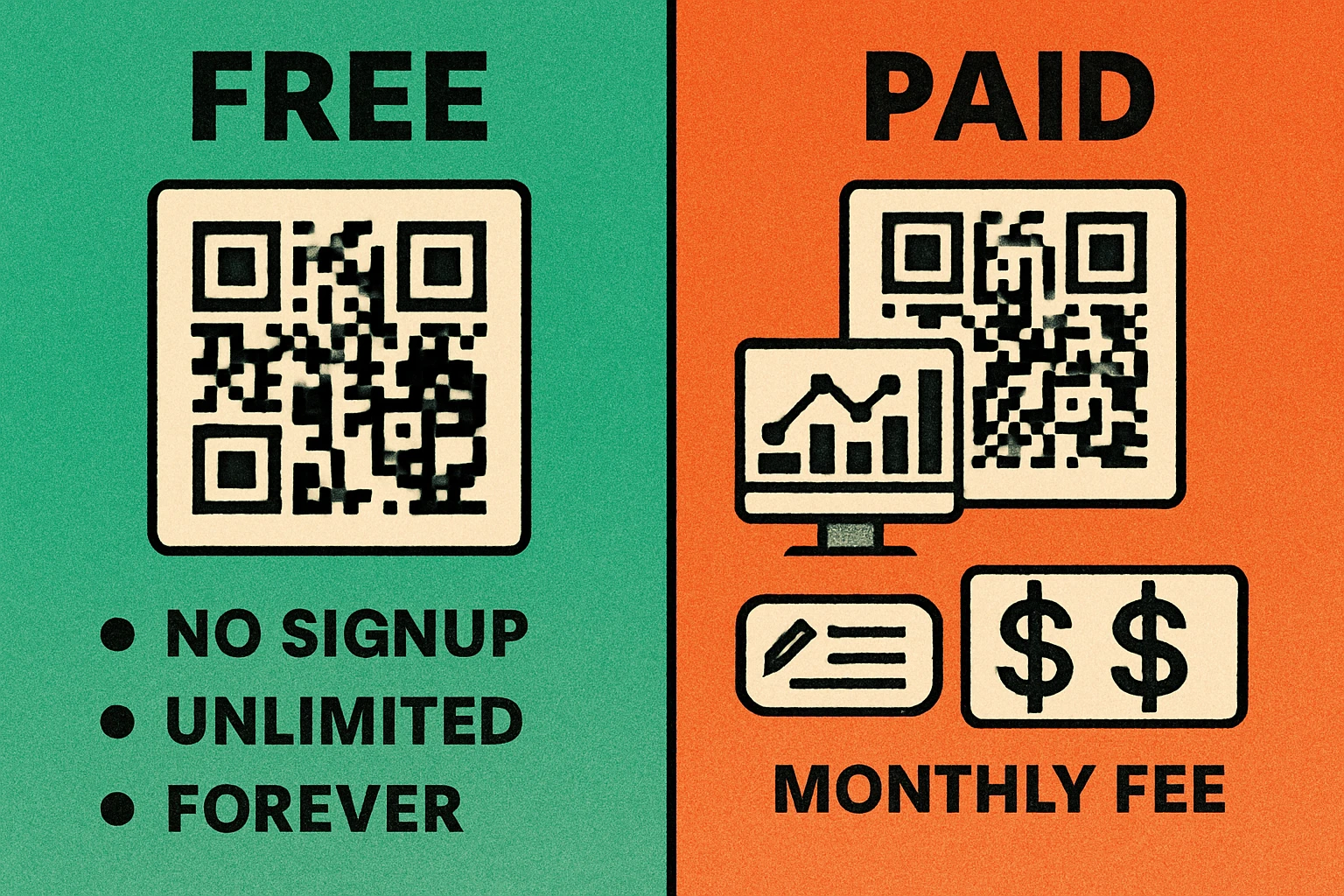
To make the distinction concrete, here is a side-by-side comparison of what you get for free versus what typically requires a paid plan:
| Feature | Free | Paid |
|---|---|---|
| Static QR codes | Yes | Yes |
| Dynamic QR codes | No | Yes |
| PNG / SVG download | Yes | Yes |
| Scan analytics | No | Yes |
| Edit after printing | No | Yes |
| Custom branding | Basic | Advanced |
| Bulk generation | No | Yes |
| Codes expire | Never | Never |
| Account required | No | Usually |
The key insight: static QR codes should always be free. If a service charges you for a basic static code, or forces you to create an account to download one, that is a red flag. The value of paid QR code services lies in the dynamic features, analytics, and management tools — not in the code generation itself.
QR Code Apps for Mac & Safari
Prefer generating codes without opening a browser tab? These two native Apple apps cover both habits — a full generator on the desktop, and a one-click share button inside Safari.
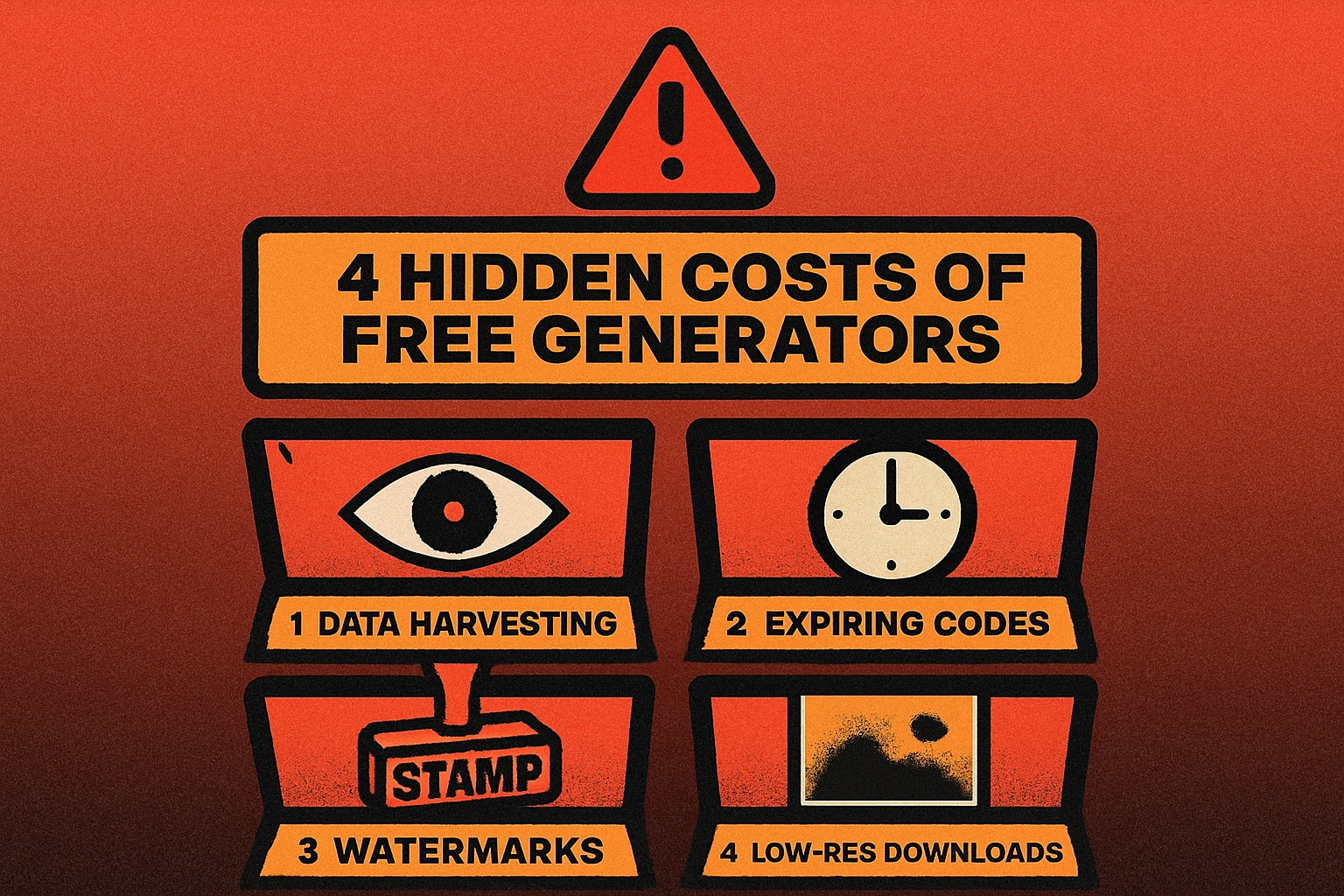
Hidden Costs of "Free" QR Code Generators
Not all free QR code generators are created equal. Some come with strings attached that can cost you more than money. Here are the most common traps to watch for:
Data Harvesting
Some "free" generators require you to create an account, enter your email, or connect a social profile before you can download a code. Why? Because your data is the product. These services collect information about what URLs you encode, how many codes you create, and what industries you work in — then sell that data to advertisers or data brokers. For more on the security implications, see our QR code security guide.
Expiring Codes
This is one of the most frustrating tactics. A service lets you create "free" QR codes, but after 14 or 30 days, the codes stop working unless you upgrade to a paid plan. This is only possible with dynamic codes (since the redirect server can be turned off), but many users do not realize their "free" code was dynamic until it dies. Our article on whether QR codes expire explains this distinction in detail.
Watermarks and Branding
Some generators overlay a watermark or the service's logo on your downloaded QR code image. The code still works, but it looks unprofessional and advertises someone else's brand on your materials. Removing the watermark requires a paid upgrade.
Injected Tracking Redirects
Instead of encoding your URL directly, some free tools route scans through their own tracking servers — even for "static" codes. This means every scan passes through a third party, adding latency, creating a privacy concern, and giving the service a kill switch over your code.
Low-Resolution Downloads
The free tier produces a small, low-resolution PNG that looks blurry in print. Want a high-res PNG or a vector SVG? That is behind the paywall.
Before using any free QR code generator, verify three things: (1) it does not require an account, (2) the encoded data matches exactly what you entered (no redirect URLs injected), and (3) the downloaded image is high-resolution without watermarks. If any of these fail, find a different tool.
Generate a Free QR Code — No Catch
No account, no watermarks, no expiring codes. Your data never leaves your browser.
How GenerateOnlineQR.com Stays Free
You might be wondering: if running a QR code service costs money, how does GenerateOnlineQR.com offer its generator for free without resorting to the tricks listed above?
The answer comes down to a few deliberate choices:
- Client-side generation. Your QR codes are generated entirely in your browser using JavaScript. Your data — URLs, text, Wi-Fi passwords — never leaves your device and never touches our servers. This eliminates the need for expensive server infrastructure dedicated to code generation.
- No accounts, no tracking. We do not require sign-ups, and we do not track what you encode. This means we have no user data to harvest or sell.
- Static codes by default. Our free generator produces true static QR codes. The data is baked directly into the pattern — no redirect servers, no kill switches, no expiration dates.
- High-resolution downloads. Every code you generate can be downloaded as a print-ready PNG or SVG at full resolution. No watermarks, no branding, no artificial limits.
We keep the lights on through this blog (which drives organic traffic), optional premium features for power users, and by keeping our infrastructure lean. The core generator will always be free — that is a commitment, not a marketing line.
Frequently Asked Questions
Yes. The QR code standard (ISO/IEC 18004) is royalty-free, meaning anyone can create and use QR codes without paying a licensing fee. Denso Wave, the original inventor, holds the patent but has chosen not to enforce royalties on the standard itself. Static QR codes can be generated for free using many online tools.
No. Denso Wave invented the QR code in 1994 and holds the patent, but the company made a deliberate decision not to exercise its patent rights. This means anyone in the world can generate, print, and scan QR codes without owing Denso Wave a cent. The "QR Code" name is a registered trademark of Denso Wave, but use of the technology itself is completely free.
Free QR code services typically generate static codes — the data is baked directly into the pattern and never changes. Paid services usually offer dynamic QR codes, which redirect through a short URL that can be updated later, along with features like scan analytics, custom branding, bulk generation, and team management. The QR code itself is always free; you pay for the software and infrastructure around it.
Some do. Free QR code generators that require account creation or email addresses may collect and sell your data, inject tracking redirects into your codes, or expire your codes after a trial period to push you toward a paid plan. To stay safe, use generators that create codes client-side (in your browser) without requiring sign-up, and always verify that the encoded URL matches exactly what you entered.