Why QR Codes Work for Every Industry
The reason QR codes have spread to virtually every sector comes down to three characteristics that no other bridging technology can match simultaneously: they are universal, low cost, and measurable.
Universal means any smartphone manufactured after 2017 can scan a QR code through its built-in camera app — no extra download required. Low cost means generating and printing a QR code costs essentially nothing; even a hand-drawn QR code on a napkin can work. Measurable means that when you pair a QR code with a dynamic link or tracking URL, you get real-time data on scans, locations, devices, and conversion rates.
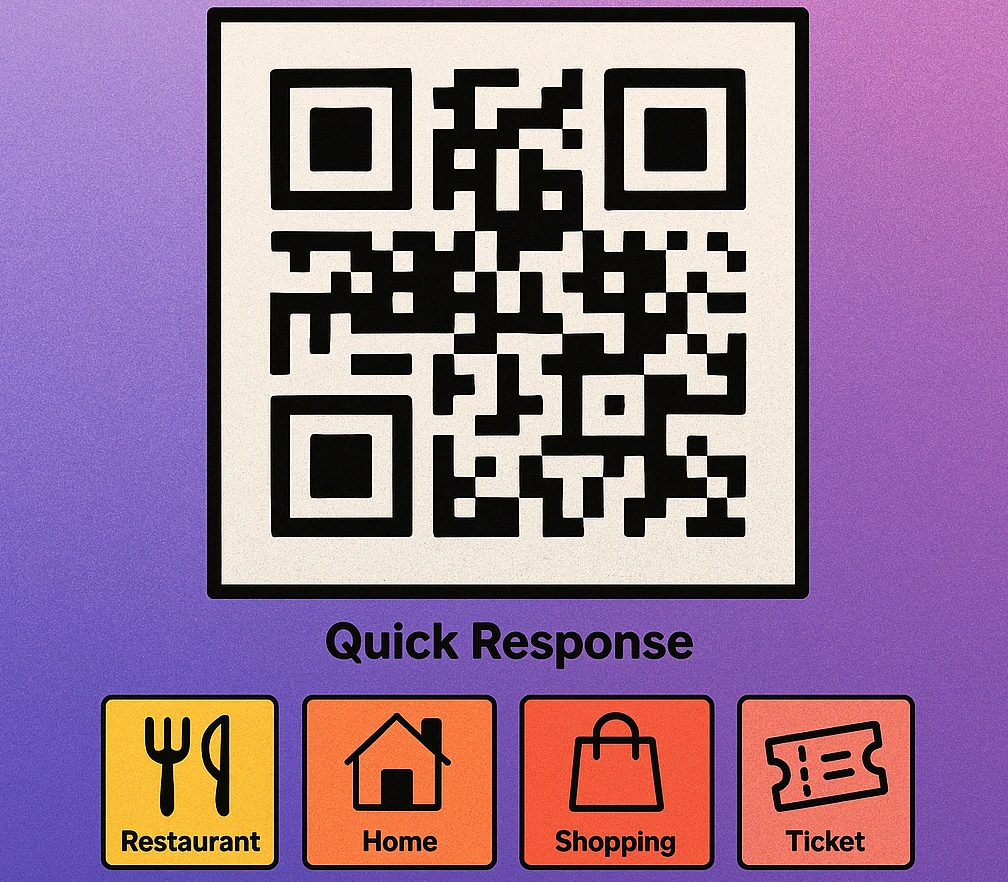
These three qualities make QR codes the simplest way to connect a physical object, location, or printed material to a digital experience. Below, we break down more than 50 specific use cases organized by industry. For a broader overview of QR code technology, see our complete QR code guide.
This is the Cluster D pillar article covering QR code applications across industries. Each section below links to a dedicated deep-dive article where you can learn implementation details, best practices, and real-world examples.
Restaurants & Food Service
The restaurant industry was among the first to adopt QR codes at scale, and the shift has proven permanent. A QR code restaurant menu eliminates reprinting costs, allows real-time updates, and gives diners a faster way to browse options.
- Digital menus — Replace paper menus with a scannable code on each table that opens a mobile-optimized menu. Update prices, add seasonal items, or mark dishes as sold out instantly.
- Contactless ordering — Let guests scan, browse, and place orders directly from their phone without waiting for a server.
- Google review prompts — Place a QR code on the check presenter that links directly to your Google Business review page, making it effortless for satisfied customers to leave feedback.
- Allergen and nutritional info — Link to a detailed page listing ingredients, allergens, and calorie counts for every dish — required by law in many jurisdictions.
- Tipping and payment — A QR code on the receipt or table tent links to a mobile payment or tipping page, speeding up checkout and increasing average tip size.
Retail & Product Packaging
Retailers and consumer brands use QR codes on product packaging to extend the customer experience beyond the shelf. Every product becomes a gateway to digital content.
- Product information pages — Link to detailed specs, how-to videos, and ingredient sourcing that won't fit on a label.
- Authenticity verification — Luxury goods, pharmaceuticals, and electronics use unique QR codes to let buyers verify a product is genuine, not counterfeit.
- Digital user manuals — Replace thick paper manuals with a scannable code that opens an interactive, searchable digital version.
- Warranty registration — A QR code inside the box links to a warranty registration form, pre-filled with the product serial number.
- One-tap reordering — Consumable products (coffee pods, vitamins, printer ink) include a QR code that links directly to the product page for instant repurchase.
Real Estate
QR codes in real estate give agents and brokerages a way to deliver rich property information to buyers exactly when curiosity is highest — while they are standing in front of the property.
- Property listing details — A QR code on the yard sign links to a full listing page with photos, floor plans, price, and neighborhood data.
- Virtual tours — Link to a 3D walkthrough or video tour so drive-by buyers can explore the interior immediately.
- Agent contact cards — The QR code saves the listing agent's name, phone, and email directly to the buyer's contacts.
- Open house signup — Visitors scan a code at the door to register their attendance and receive follow-up emails automatically.
Events & Entertainment
From music festivals to corporate conferences, QR codes for events and ticketing streamline every touchpoint in the attendee journey.
- Mobile tickets — Replace paper tickets with QR codes delivered via email or app. Scan at the gate for fast, contactless entry.
- Conference badges — Print a unique QR code on each attendee's badge. When two people scan each other's badges, their contact info is exchanged instantly.
- Event schedules — A QR code in the venue lobby links to the live schedule, including last-minute room changes and speaker updates.
- Post-event feedback — Place QR codes at session exits that link to a short survey. Capture feedback while the experience is fresh.
- Networking and lead capture — Exhibitors display QR codes at their booths so attendees can scan to download whitepapers, schedule demos, or join mailing lists.
Education
QR codes in education help teachers, administrators, and librarians connect physical spaces and printed materials to digital resources without requiring students to type URLs.
- Homework and resource links — Print QR codes on worksheets that link to supplementary videos, interactive exercises, or reading materials.
- Classroom attendance — Students scan a QR code displayed on the projector to check in, replacing manual roll calls.
- Library book info — QR codes on shelf labels link to the library catalog page showing availability, reviews, and related titles.
- Campus wayfinding — QR codes on building directories and campus maps open an interactive map with directions on the student's phone.
Healthcare
QR codes in healthcare improve patient safety, reduce administrative friction, and accelerate information access in time-critical environments.
- Patient identification — QR codes on hospital wristbands link to the patient's electronic health record, reducing identification errors during medication administration.
- Medication information — A QR code on a prescription label links to dosage instructions, side effects, drug interactions, and refill options.
- Check-in and intake forms — Patients scan a QR code in the waiting room to complete intake paperwork on their phone, eliminating clipboards and manual data entry.
- Medical records access — Secure QR codes on patient portals or discharge summaries provide authenticated access to test results and visit notes.
Nonprofits & Fundraising
QR codes for nonprofits remove friction from the giving process. When someone feels moved to donate, the QR code gets them to the payment page in one scan.
- Instant donation pages — QR codes on direct mail, event signage, and social media posts link directly to a mobile-optimized donation form.
- Volunteer signup — A QR code at events or community boards links to a volunteer registration form with shift selection.
- Awareness campaigns — Print QR codes on posters, flyers, and merchandise that link to campaign landing pages with impact stories and calls to action.
- Recurring giving enrollment — Link to a page where donors can set up automatic monthly contributions with a single scan.
Build Your Industry QR Code Now
No matter your industry, creating a QR code takes seconds. Paste any URL and download a print-ready file instantly.
QR Code Apps for Mac & Safari
Prefer generating codes without opening a browser tab? These two native Apple apps cover both habits — a full generator on the desktop, and a one-click share button inside Safari.

Hospitality & Travel
Hotels, resorts, and travel companies use QR codes in hospitality to replace printed collateral, speed up service, and collect guest feedback.
- Room service menus — A QR code on the nightstand replaces the printed room service binder with a digital menu that's always current.
- Wi-Fi auto-connect — Guests scan a code in the room to connect to the hotel Wi-Fi instantly — no password typing required.
- Concierge and local guides — QR codes in the lobby link to curated local restaurant, attraction, and transportation guides.
- Express checkout — A QR code on the TV screen or door hanger lets guests review their bill and check out without visiting the front desk.
- Review collection — Place QR codes at checkout that link to TripAdvisor or Google review pages, capturing feedback from happy guests at the moment of departure.
Business & Professional Networking
QR codes are replacing traditional networking tools with smarter, always-current digital alternatives.
- Digital business cards — A QR code on a physical card (or displayed on your phone) saves your full contact info, social profiles, and website to the recipient's phone in one scan.
- QR code resumes — Job seekers add a QR code to their printed resume that links to a portfolio, LinkedIn profile, or video introduction.
- Portfolio links — Designers, photographers, and freelancers use QR codes on printed promos to link directly to their online portfolio.
- Employee badges — Corporate ID badges with QR codes enable building access, meeting check-ins, and internal directory lookups.
Operations & Logistics
In warehouses, factories, and job sites, QR codes bring real-time digital tracking to physical assets and processes.
- Inventory management — Attach QR codes to inventory bins, pallets, or individual items to track stock levels, locations, and movement history with a smartphone scan.
- Warehouse picking — Workers scan bin-level QR codes to confirm correct item picks, reducing errors in order fulfillment.
- Construction site management — QR codes on materials, equipment, and safety checklists link to inspection logs, maintenance schedules, and compliance documentation.
- Field service and maintenance — Technicians scan a QR code on equipment to pull up service history, manuals, and parts ordering in the field.
Fitness & Wellness
QR codes in fitness and wellness facilities improve the member experience while reducing staff workload.
- Equipment instructions — QR codes on gym machines link to video demonstrations showing proper form and suggested workout routines.
- Class schedules and booking — A QR code at the studio entrance links to the live class schedule with one-tap booking.
- Membership management — Members scan a QR code on their phone or key fob to check in, access facilities, and view their membership status.
Weddings & Personal Events
QR codes on wedding invitations and personal event stationery combine elegance with practicality.
- RSVP forms — Guests scan the QR code on the invitation to RSVP digitally, select their meal preference, and note dietary restrictions.
- Venue maps and directions — Link to an interactive map with parking instructions, ceremony and reception locations, and nearby accommodation.
- Gift registry — A QR code on the invitation links directly to the couple's registry, making it easy for guests to browse and purchase gifts.
- Photo sharing — Display a QR code at the reception that opens a shared photo album where guests can upload their pictures in real time.
Compliance & Regulation
Governments and regulatory bodies are increasingly mandating QR codes as a transparency mechanism. The most significant development is the EU Digital Product Passport.
- EU Digital Product Passport (DPP) — Starting with batteries and textiles, the EU will require products to carry a QR code linking to detailed data about materials, manufacturing processes, carbon footprint, repairability, and end-of-life recycling instructions.
- Food traceability — QR codes on food products link to farm-to-table supply chain data, letting consumers verify origin, handling conditions, and certifications.
- Safety data sheets — Chemical products and industrial materials use QR codes to provide instant access to safety data sheets (SDS) required by OSHA and GHS regulations.
The EU Digital Product Passport will be phased in between 2027 and 2030. Brands selling physical products in the EU should begin planning their QR code infrastructure now. Read our full DPP guide for implementation details.
Frequently Asked Questions
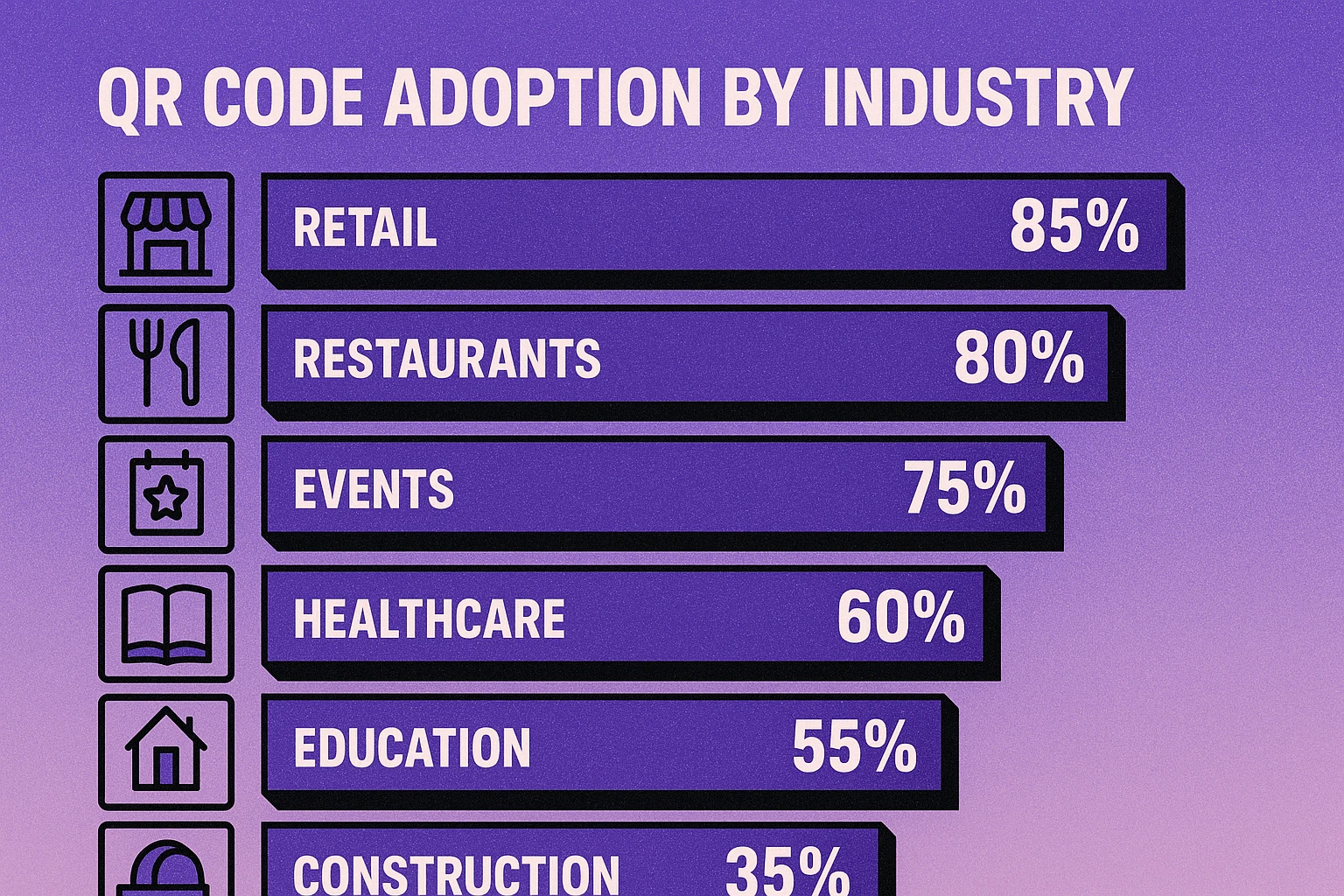
Restaurants and food service currently lead QR code adoption, largely driven by the shift to contactless digital menus during the pandemic. Retail and product packaging is a close second, especially as brands add QR codes for product authentication, reordering, and the EU Digital Product Passport requirement.
QR codes have well over 50 documented use cases spanning every major industry. Because a QR code can encode any text-based data — URLs, plain text, contact info, Wi-Fi credentials, GPS coordinates — the number of potential applications is essentially unlimited. New use cases emerge regularly as businesses find creative ways to bridge physical and digital experiences.
Yes. QR code usage continues to grow year over year. Every modern smartphone can scan QR codes natively through its camera app, eliminating the friction that once limited adoption. Industries like healthcare, logistics, and compliance are still in early stages of QR code integration, meaning growth will continue for years.
A single QR code points to one destination, but that destination can serve multiple purposes. For example, a dynamic QR code can link to a landing page that offers a menu, review link, and Wi-Fi password all in one place. Dynamic QR codes also let you change the destination URL without reprinting the code.
The EU Digital Product Passport (DPP) is an upcoming regulation requiring certain products sold in the European Union to carry a QR code linking to detailed information about the product's materials, manufacturing, carbon footprint, repairability, and recycling instructions. It will be phased in starting with batteries and textiles, eventually covering most consumer goods.